Bouncy castle delivery planner
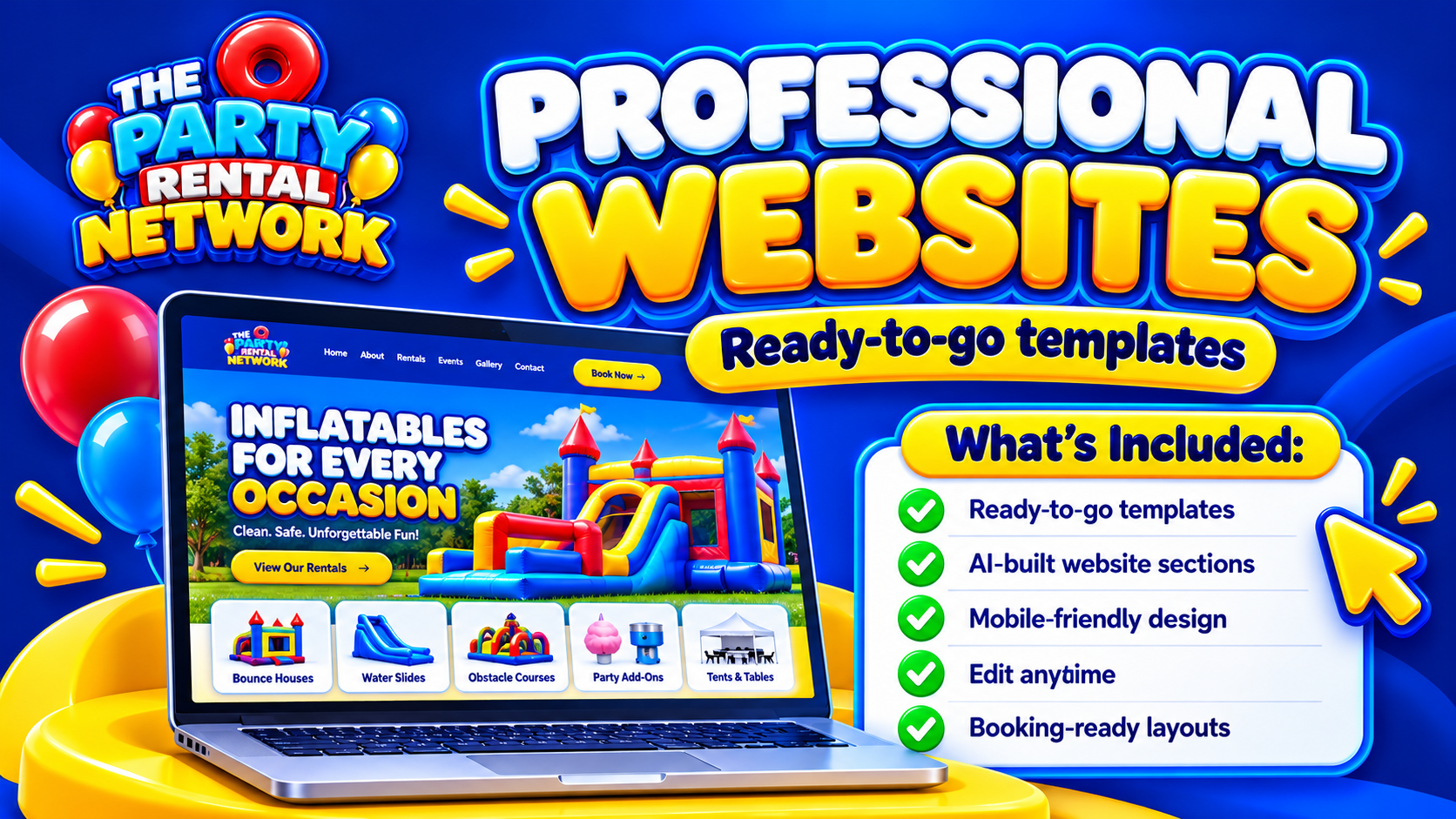
What Is The Party Rental Network?
A connected booking, website and AI-powered business platform built around party rentals and event hire, with tools for your equipment, customers, team and wider industry network.
What Type of Party Rental Business Do You Run?
Equipment records, safety documents, delivery planning and artwork tools help keep inflatable hire jobs organised.
A bouncy castle delivery planner needs to solve a problem that a postcode sorter cannot: the first castle delivered may be the last one collected. Between those journeys sit school gates, narrow garden paths, setup time and equipment that must remain accessible in the van. A workable plan connects the booking promise to the vehicle, crew and return journey.
For UK inflatable hire businesses, the useful question is not simply “Which address comes next?” It is “Can this crew complete this job properly before the next commitment?”
See what's possible
Start with the site, not the postcode
Two addresses on the same street can need very different delivery allowances. One might offer driveway access beside the setup area; another could involve a long carry through a side passage. Capture the information that changes the job before allocating it to a route.
Record the agreed arrival window, event start, access restrictions, setup location and collection arrangements. Establish who can open gates or provide entry. A venue opening at 09:00 is not equivalent to a booking that must be fully set up by 09:00.
Party Rental Network includes shared venue passports. Use available venue information as a starting point, then confirm booking-specific conditions rather than assuming an earlier visit describes today’s access.
Build delivery windows around actual work
Imagine a Saturday with a village hall party, a garden hire and a school event. The shortest driving route might put the hall first, but its caretaker may not arrive until later. Meanwhile, the school may require vehicles to leave the grounds before guests enter.
Build the schedule around those constraints. Allow for travel, unloading, carrying, installation and the checks and handover required for that hire. Keep an explicit contingency allowance rather than quietly treating every stop as a perfect arrival.
The network’s Route Planning & Loading features cover transport planning and 3D van loading. Treat the proposed route as an operational plan to review, not evidence that every venue promise is achievable.
Plan the load and the return together
A sensible outward route can still produce an awkward van load. Equipment needed first should be accessible, while every booking needs its associated items checked against the allocated inflatable. Do not judge vehicle suitability from floor space alone: payload, dimensions and safe securing also matter.
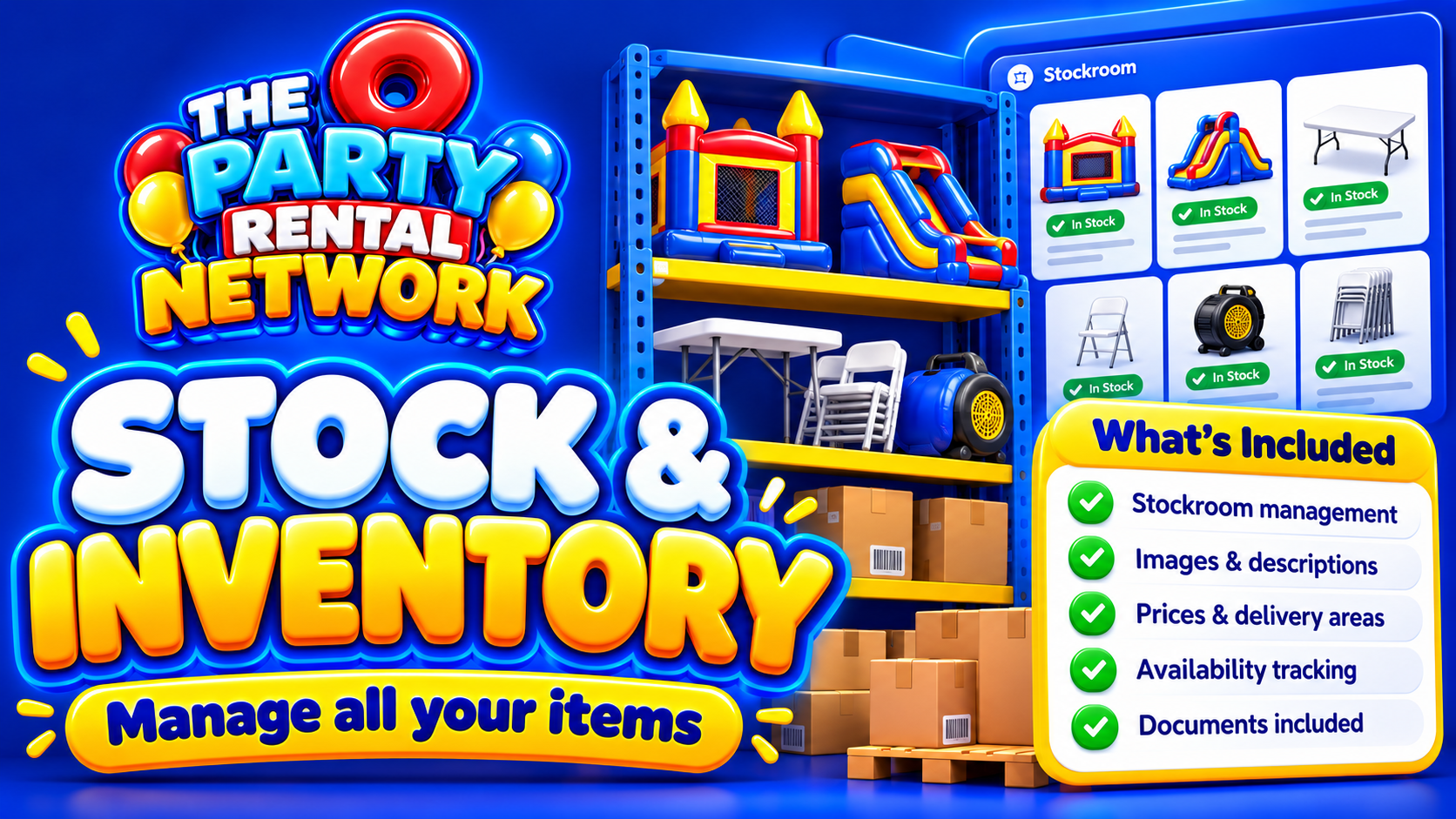
Use Stock & Inventory alongside the delivery plan to review equipment allocation. Consider collection order before dispatch, especially where an early pickup must fit around items still travelling to later jobs.
Wet or damaged equipment creates a separate planning decision. It may need handling, drying or repair before another hire. The related guide to inflatable damage tracking software explores that return-to-availability problem; a completed collection should not automatically mean an item is ready again.
Give crews a plan they can act on
A driver needs more than a sequence of addresses. Make the site contact, agreed window, equipment allocation and unusual access instructions clear. Decide who owns customer communication if a delay affects later stops.
Booking management and staff planning are part of the connected platform. The practical setup task is agreeing where the current information lives and who may change it. If a customer moves the setup area or requests a different collection time, review the knock-on effect before accepting.
Customer Management is relevant to keeping customer information organised. Your dispatch process should make clear which instructions the crew must follow, rather than relying on scattered messages.
Select software by testing a difficult day
When comparing bouncy castle delivery planner software, test an awkward schedule rather than an empty demonstration. Include restricted access, overlapping delivery windows and a collection that disrupts the outward route.
Software selection concerns the tools: transport planning, loading views and access to booking information. System setup concerns your operating rules: who allocates vans, how long jobs need and when a route becomes ready for dispatch. Buying tools does not settle those decisions.
The party rental booking system guide covers the broader booking context. For delivery planning, use a demo to check package scope and how your own dispatch process would fit.
Understand free access and paid tools
Free Party Rental Network accounts can list equipment and become eligible for opportunities. Paid subscriptions provide business tools according to package. Do not assume that opening a free account includes every planning feature; check the current package details before adopting it for dispatch.
You can join the network with that distinction in mind. Eligibility does not guarantee bookings or income. Where network hire is agreed, the supplier sets the agreed hire price and the network adds its margin.
Questions about bouncy castle delivery planning
Is route planning the same as live vehicle tracking?
No. Route and driver planning organise intended journeys and assignments. They should not be treated as live GPS tracking or proof of a vehicle’s current position.
How much time should each delivery allow?
Base allowances on equipment, access, crew and required setup work. Review your own completed jobs rather than applying one universal stop duration.
Should collections have their own schedule?
Yes. Check collection commitments separately, then reconcile them with deliveries, vehicle capacity and staff availability. The outward route alone cannot show the whole workload.
Can a planner confirm that a setup is safe?
No. Software cannot certify equipment or replace competent assessment, relevant instructions and qualified safety advice. Scheduling must leave room for required checks.
What happens if access changes on arrival?
The crew should contact the responsible planner and reassess the job. Avoid promising a revised time elsewhere until the consequences are understood.
Can a small operator benefit from delivery planning?
Yes, even one van faces competing time windows and loading constraints. Start with reliable booking details and realistic allowances, then evaluate paid tools against your actual workload.