Bouncy castle website design
What Is The Party Rental Network?
A connected booking, website and AI-powered business platform built around party rentals and event hire, with tools for your equipment, customers, team and wider industry network.
What Type of Party Rental Business Do You Run?
Equipment records, safety documents, delivery planning and artwork tools help keep inflatable hire jobs organised.
A bouncy castle website has to answer a question that most shop websites never face: will this product actually work at this address, on this surface, on this date? A striking photograph may win attention, but a parent measuring a garden needs something more useful before they can book.
Good bouncy castle website design turns those uncertainties into a clear journey. It helps customers shortlist suitable equipment, understand delivery conditions and provide the details your hire business needs, without disguising operational checks behind a large booking button.
See what's possible
Design around the garden, not just the gallery
Start with the decisions customers make. Someone arranging a birthday party may know the children's ages and available garden space, but not the difference between an inflatable's footprint and its required operating area.
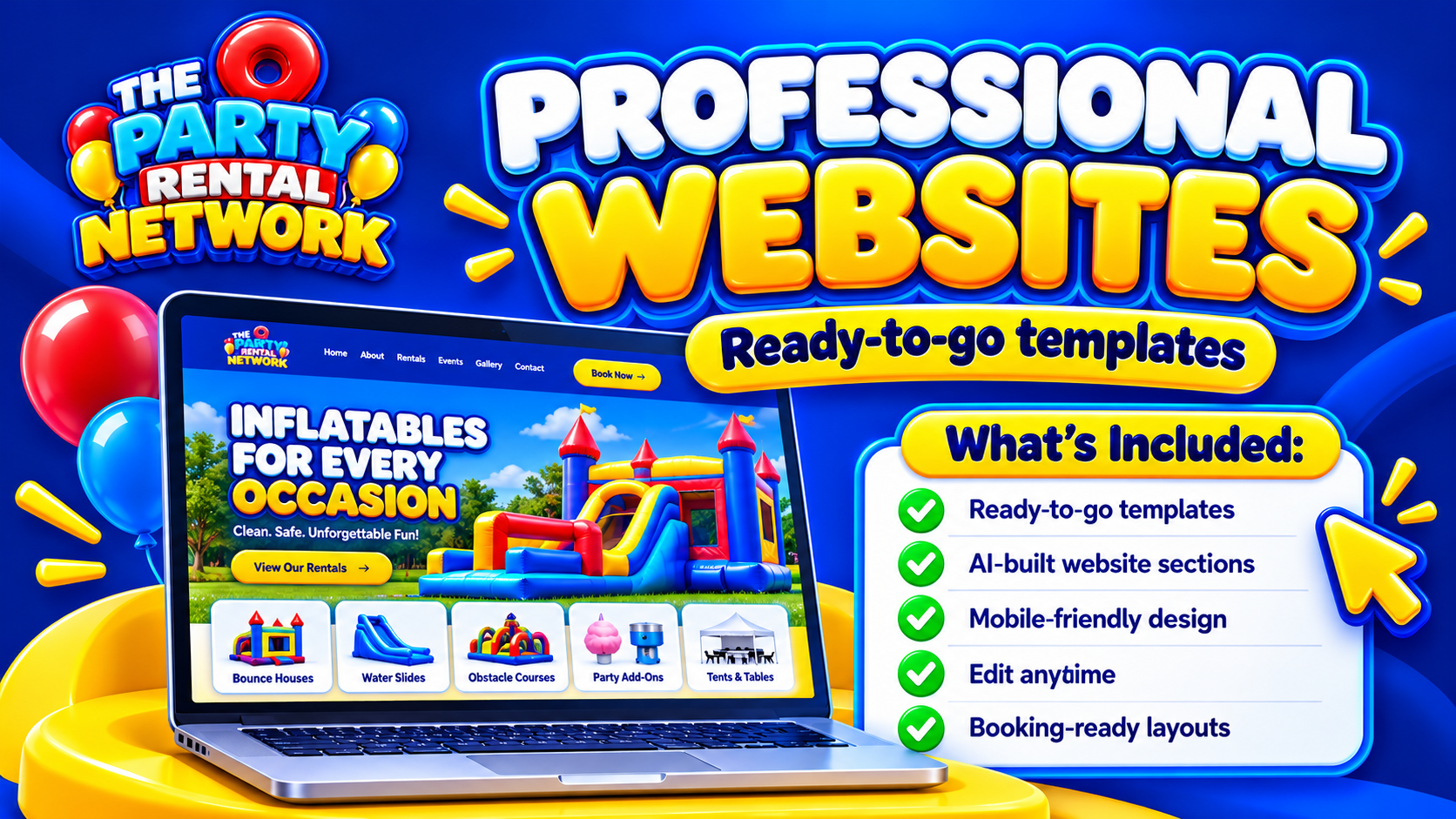
Your homepage should provide clear routes into relevant equipment categories, with readable photographs and meaningful labels. On mobile, customers should reach dimensions, suitability information and the next step without navigating decorative sliders. Party Rental Network's professional websites are worth exploring alongside a practical brief: which questions must each page answer before someone contacts you?
Make every castle page a fit check
A product page should distinguish equipment dimensions from the total space required, using verified information appropriate to that inflatable. Explain access requirements, permitted surfaces and any relevant restrictions in plain language. Avoid treating an age suggestion as a substitute for manufacturer limits or operating guidance.
For illustration, a customer hiring for a narrow terraced garden may have enough lawn but insufficient side access. A clearly placed access explanation can reveal that issue before either party assumes the booking is suitable.
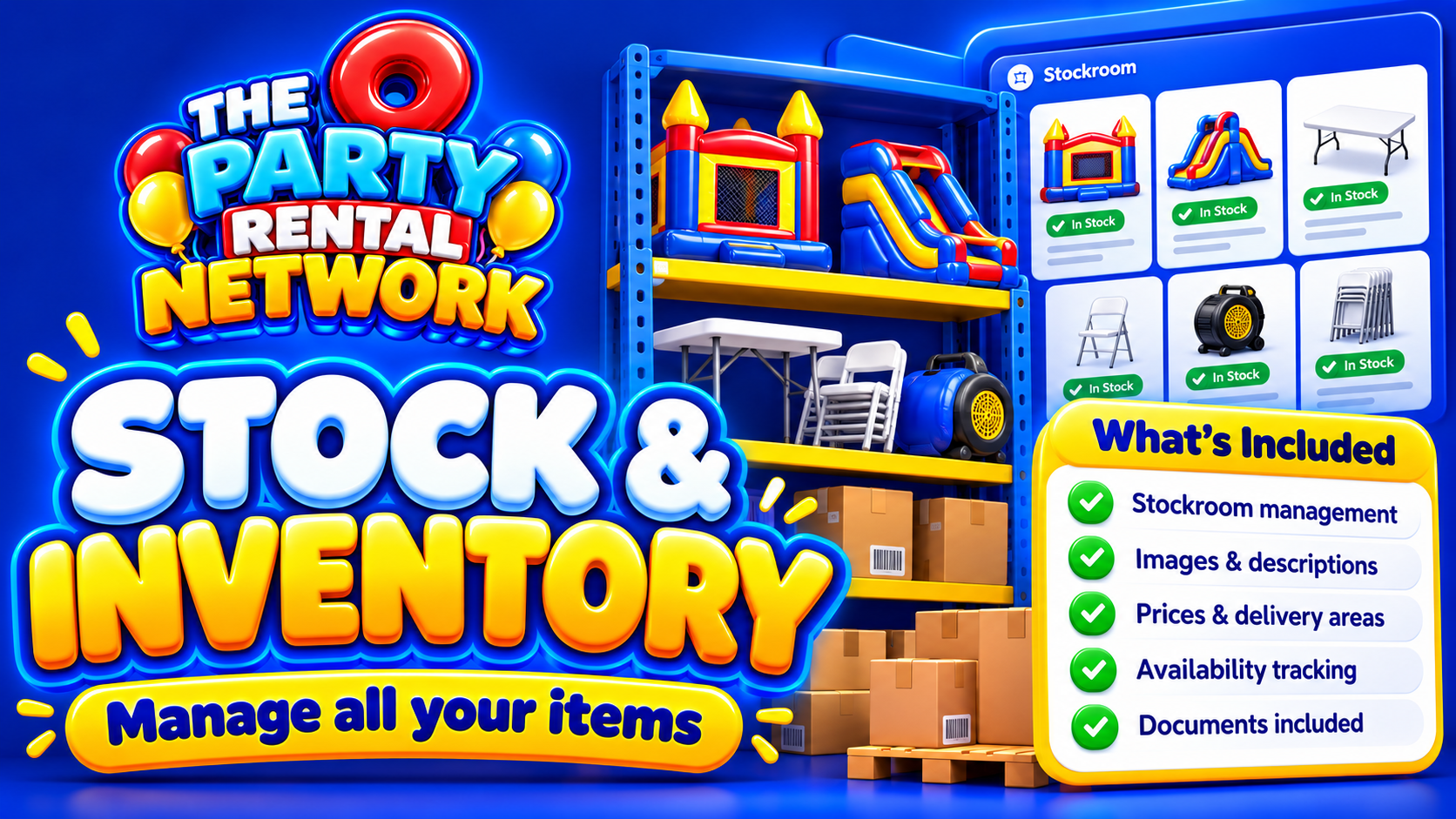
Show representative photographs, state what the hire includes and identify anything priced separately. Keep website descriptions aligned with your equipment records; the stock and inventory feature is relevant when reviewing how your catalogue will be maintained.
Explain delivery before asking for commitment
Delivery information belongs near the booking journey, not solely in terms and conditions. Explain your service area, how delivery charges are established and whether arrival times are confirmed separately from the party start time.
Consider an illustrative village-hall booking: the customer has access from midday, while the party starts shortly afterwards. Your enquiry process needs to uncover the setup window, collection deadline and venue restrictions rather than recording only an event date.
A postcode check or delivery-area explanation should make boundaries understandable. Do not publish near-identical town pages that imply local availability you have not established.
Choose the booking journey before the visual theme
Website software selection concerns what customers can do: browse equipment, submit an enquiry or progress through configured booking steps. System setup concerns what happens behind those screens: catalogue organisation, availability rules, delivery assumptions and staff responsibilities.
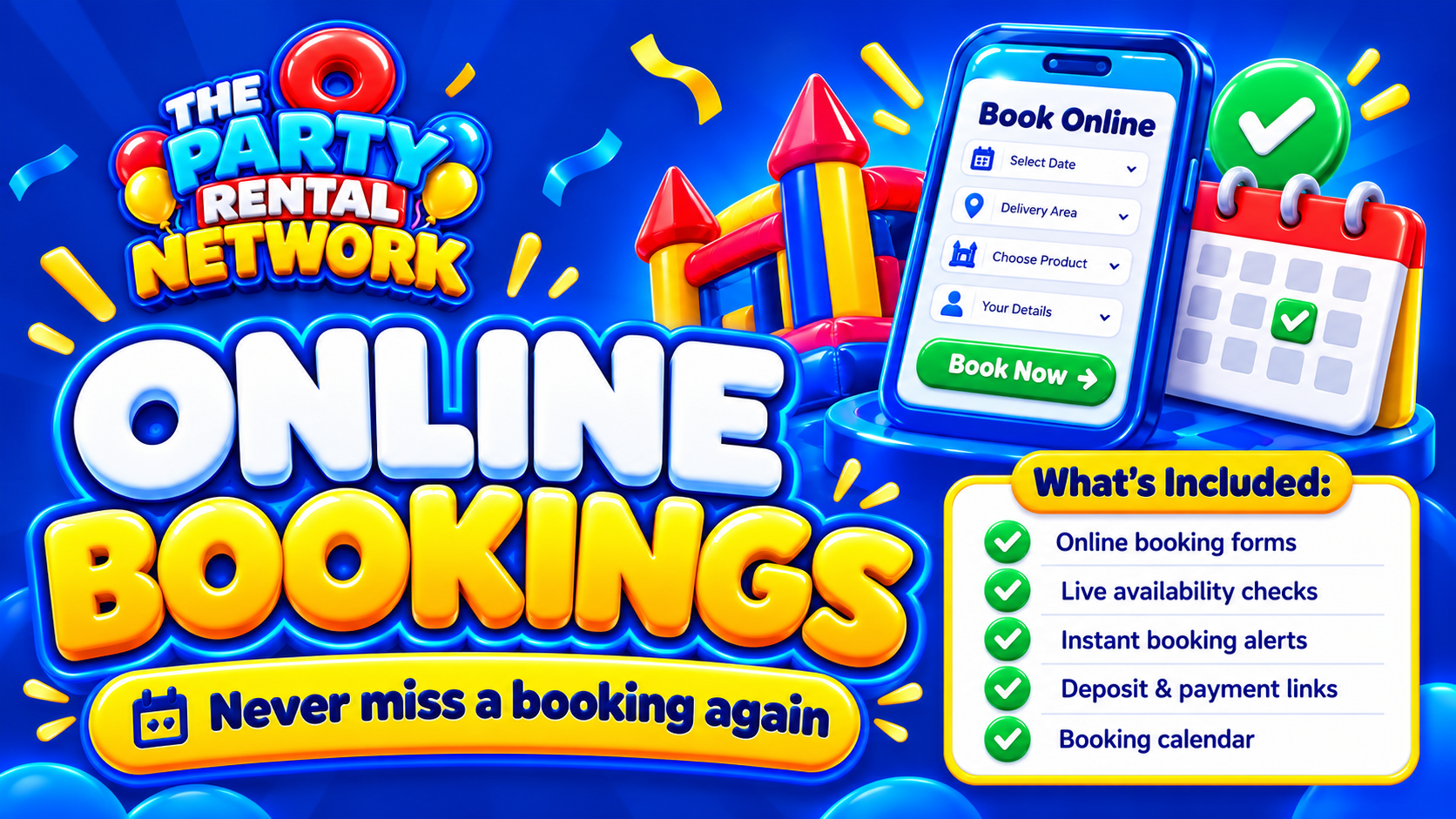
These are different decisions. An attractive template cannot resolve unclear operating rules. When assessing online bookings, work through a realistic example involving two products, a restricted setup window and a customer changing their venue.
Make the distinction between an enquiry, a provisional request and a confirmed booking explicit. Payment options depend on configuration and launch safeguards, so the design must not promise an available checkout method until it is enabled and verified.
Build search pages with useful local detail
Search-friendly design starts with pages people can understand. Use descriptive headings, clear product names, readable text and sensible internal navigation. Local content should explain genuine delivery coverage or relevant venue considerations, rather than repeating a town name around generic claims.
Explore Auto SEO as part of your publishing approach, while retaining responsibility for accurate descriptions. Software cannot assure Google indexing or rankings. If your range extends into obstacle courses and other inflatables, inflatable hire website design addresses the broader catalogue brief.
Budget for the website's working life
Affordability includes keeping photographs, equipment details, seasonal information and booking wording current. Compare packages against those tasks, not just the appearance of a demonstration homepage.
Free Party Rental Network accounts can list equipment and become eligible for opportunities; they do not guarantee bookings or include every paid business tool. Paid subscriptions provide tools according to package. Before you join the network, check which website facilities your chosen package includes. A demo can help you examine the proposed customer journey against your requirements.
Bouncy castle website design questions
Should prices appear on every product page?
Show a clear pricing basis wherever practical. Explain delivery charges, optional extras and circumstances requiring a quotation, so customers understand what a displayed figure covers.
Can customers book without speaking to us?
That depends on your configured workflow. Establish which suitability checks happen online and which require review before presenting a booking as confirmed.
What should a mobile product page prioritise?
Prioritise the photograph, hire information, dimensions, suitability details and next step. Essential conditions should remain easy to find beside the decision they affect.
Does an equipment photograph prove it is safe?
No. Images and website statements cannot certify equipment. Publish accurate information and maintain appropriate inspection, operating and documentation processes with qualified advice where needed.
Can AI maintain the whole website for us?
Treat assistance as support, not unsupervised authority. Review generated wording against your equipment and policies; AI party rental management explores the wider management context.
What should we prepare before design begins?
Gather verified equipment details, current photographs, delivery boundaries, hire terms and your booking stages. These give the designer a reliable structure rather than a collection of assumptions.