Event hire transport management
What Is The Party Rental Network?
A connected booking, website and AI-powered business platform built around party rentals and event hire, with tools for your equipment, customers, team and wider industry network.
What Type of Party Rental Business Do You Run?
Equipment records, safety documents, delivery planning and artwork tools help keep inflatable hire jobs organised.
The hardest mile in event hire is often the last twenty metres: a locked service gate, a narrow corridor or a function room that is not ready. Event hire transport management needs to account for that final approach, not just the journey between postcodes.
Party Rental Network connects transport planning and 3D van loading with booking management and equipment records. The practical aim is to build a workable dispatch plan around what is going out, where it must arrive and what happens after collection.
See what's possible

Plan around access windows, not just addresses
A delivery time is rarely the whole instruction. A hotel may permit unloading before breakfast service but require installation later. A village hall might have one keyholder, while a festival site could restrict vehicle access once visitors arrive.
Separate arrival, unloading, setup and departure when preparing the day's schedule. Allow for gates, parking arrangements and the distance between vehicle and installation point. Route Planning & Loading is relevant to these dispatch decisions; a short driving route is not necessarily the most workable delivery sequence.
Load for the next stop, not just available space
Imagine a van carrying tables for a wedding, soft play for a morning party and lighting for an afternoon reception. Everything might fit, yet the first delivery can still be buried behind the last.
Use 3D van loading to consider load arrangement alongside stop order. Think about bulky bases, protective cases and which accessories must leave with each item. A visual loading plan does not establish safe payload, axle loading or load restraint. Those checks remain essential, using vehicle information and competent judgement rather than the appearance of a successful fit.
Treat collections as a second dispatch plan
Collections introduce a different set of constraints. Equipment may be dismantled late, packed differently or returned wet. An apparently empty afternoon can become congested when several venues need their rooms cleared at once.
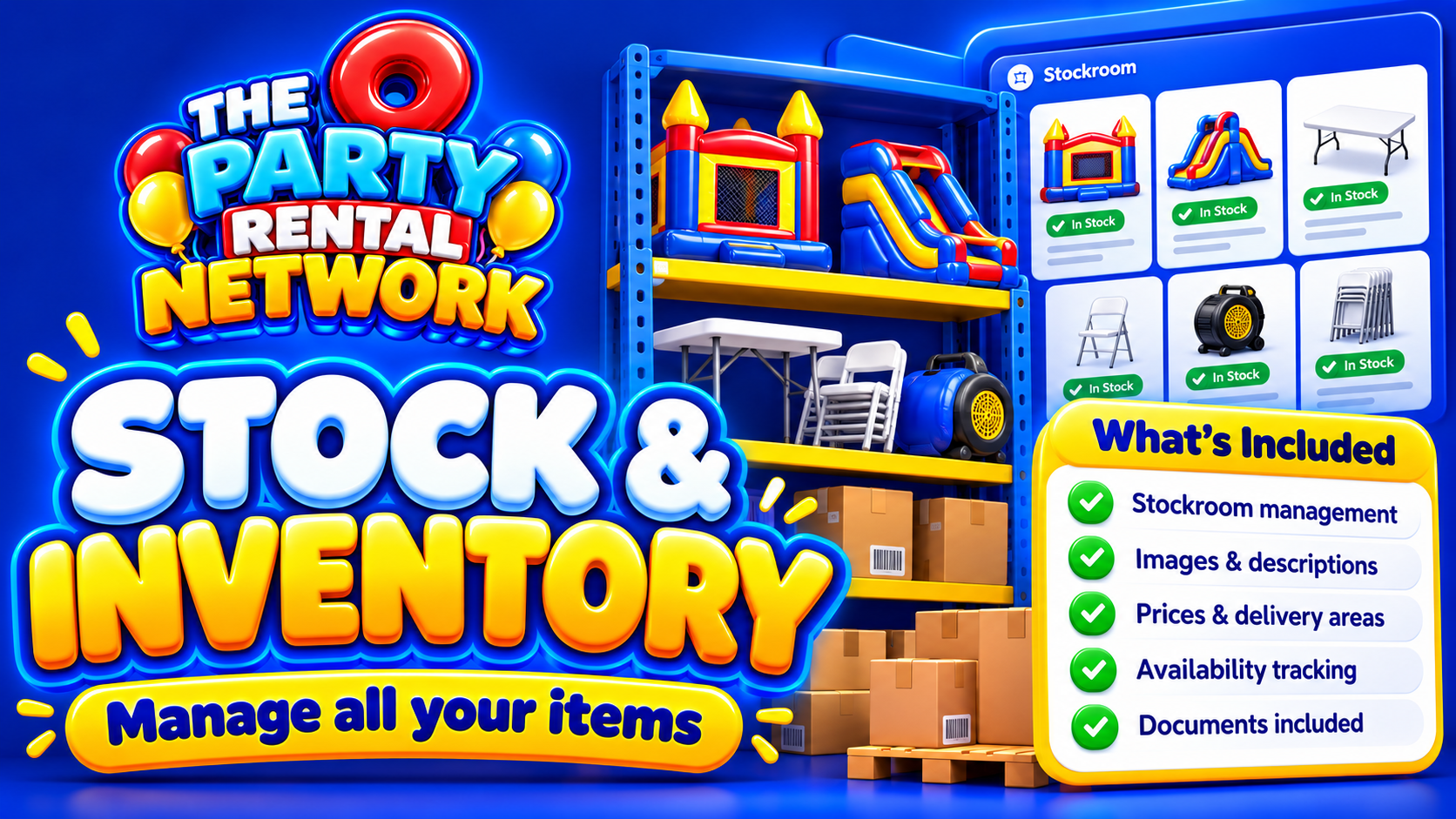
Build collection arrangements alongside deliveries, allowing time for dismantling and handling. Connect transport decisions with Stock & Inventory: an item arriving back at the yard is not automatically ready for its next booking. Party Rental Network includes repairs and wet-equipment functions, helping businesses distinguish returned equipment from equipment that still needs attention before reuse.
Choose software by testing your working system
Transport software is the tool; your transport management system also includes responsibilities, checks and handovers. Before selecting a package, test an awkward but realistic day rather than a simple single-drop journey.
Can the proposed setup support your approach to split deliveries, shared crews and a changed venue entrance? Establish who updates instructions, who approves revised timings and how drivers receive changes. Review Party rental booking software alongside transport requirements, because booking details underpin dispatch. A useful evaluation follows information from enquiry through loading, delivery and return, rather than comparing isolated feature names.
Give crews a usable venue handover
A driver needs actionable information: the correct entrance, an on-site contact and an agreed unloading arrangement. Keep customer details organised through Customer Management, and decide which instructions belong with the job rather than in somebody's personal messages.
Shared venue passports can support venue knowledge, but access details should still be checked for the particular event. An entrance used last year may now be unavailable. For handling hazards and site documentation, consider Party rental risk assessment software. Software supports preparation and records; it cannot replace a suitable assessment or qualified safety advice.
Match account access to operational needs
Free network accounts can list equipment and become eligible for opportunities. They should not be confused with access to every transport or business tool. Paid subscriptions provide business tools according to package, so check the current inclusion of transport planning and 3D loading before choosing.
The account registration page is a starting point for joining the network. Assess value against your actual workload: dispatch complexity, vehicle mix and the time spent resolving unclear instructions. Neither account registration nor a paid subscription guarantees bookings, income or savings.
Questions about event hire transport management
Does transport planning include live vehicle tracking?
Route and driver planning are distinct from live GPS tracking. Do not assume that planning a route provides a real-time vehicle position or automatically updates customers with arrival estimates.
Can a loading plan prove that a van is safe?
No. A 3D arrangement helps visualise space and access, but does not certify safe loading. Check weight limits, restraint requirements and the suitability of the vehicle separately.
How should we handle a last-minute venue change?
Recheck the route, access window, unloading conditions and crew timing. Nominate someone to approve the revised plan and ensure affected staff receive the current instructions before proceeding.
Should delivery and collection use the same route?
Not necessarily. Collection deadlines, dismantling time and the condition of returned equipment can make a different sequence more practical. Plan each journey around its own constraints.
Can drivers manage bookings by voice?
Confirmed Work Mode booking voice actions are available subject to permissions and confirmation. Not every dashboard action is voice-enabled. Drivers should only interact with devices when safe and lawful.
What should we prepare before setting up transport tools?
Gather vehicle details, typical loading arrangements, venue access notes and realistic handling times. Agree who maintains each record so the setup reflects daily work rather than assumptions.