Party rental digital marketing
What Is The Party Rental Network?
A connected booking, website and AI-powered business platform built around party rentals and event hire, with tools for your equipment, customers, team and wider industry network.
What Type of Party Rental Business Do You Run?
Equipment records, safety documents, delivery planning and artwork tools help keep inflatable hire jobs organised.
A busy enquiry inbox can hide a weak marketing strategy. If every Saturday request is for equipment already reserved, or deliveries outside your workable area, more traffic creates more administration rather than better business. Party rental digital marketing should attract the right occasion, location and hire date, then help customers understand what happens next.
For UK hire companies, the strongest starting point is not posting more often. It is making your offer easier to find, assess and book without advertising promises your stockroom or delivery schedule cannot support.
See what's possible
Start with the occasion, not just the equipment
Customers may search for “garden party seating hire” before knowing whether they need folding chairs, benches or a complete furniture package. Organise your marketing around both the equipment and the situation it solves.
An illustrative village-hall birthday enquiry needs different information from a corporate summer event: access arrangements, collection windows, seating capacity and setup responsibilities may determine the decision. Build distinct landing pages where those needs genuinely differ. Avoid creating dozens of near-identical pages that merely swap a town name.
Use enquiry language to improve those pages. Repeated questions about narrow side gates or upstairs venues reveal information customers need before contacting you.
Make local search pages useful enough to convert
A local hire page should explain your actual service area, relevant equipment, delivery considerations and how customers request their date. Separate delivery coverage from your business address, and keep opening hours and contact details consistent wherever you publish them.
Original photographs help customers judge scale and presentation. Show equipment in context, with permission where required, and describe what the pictured arrangement includes. A photograph of a fully styled marquee should not imply that every decoration comes with the base hire.
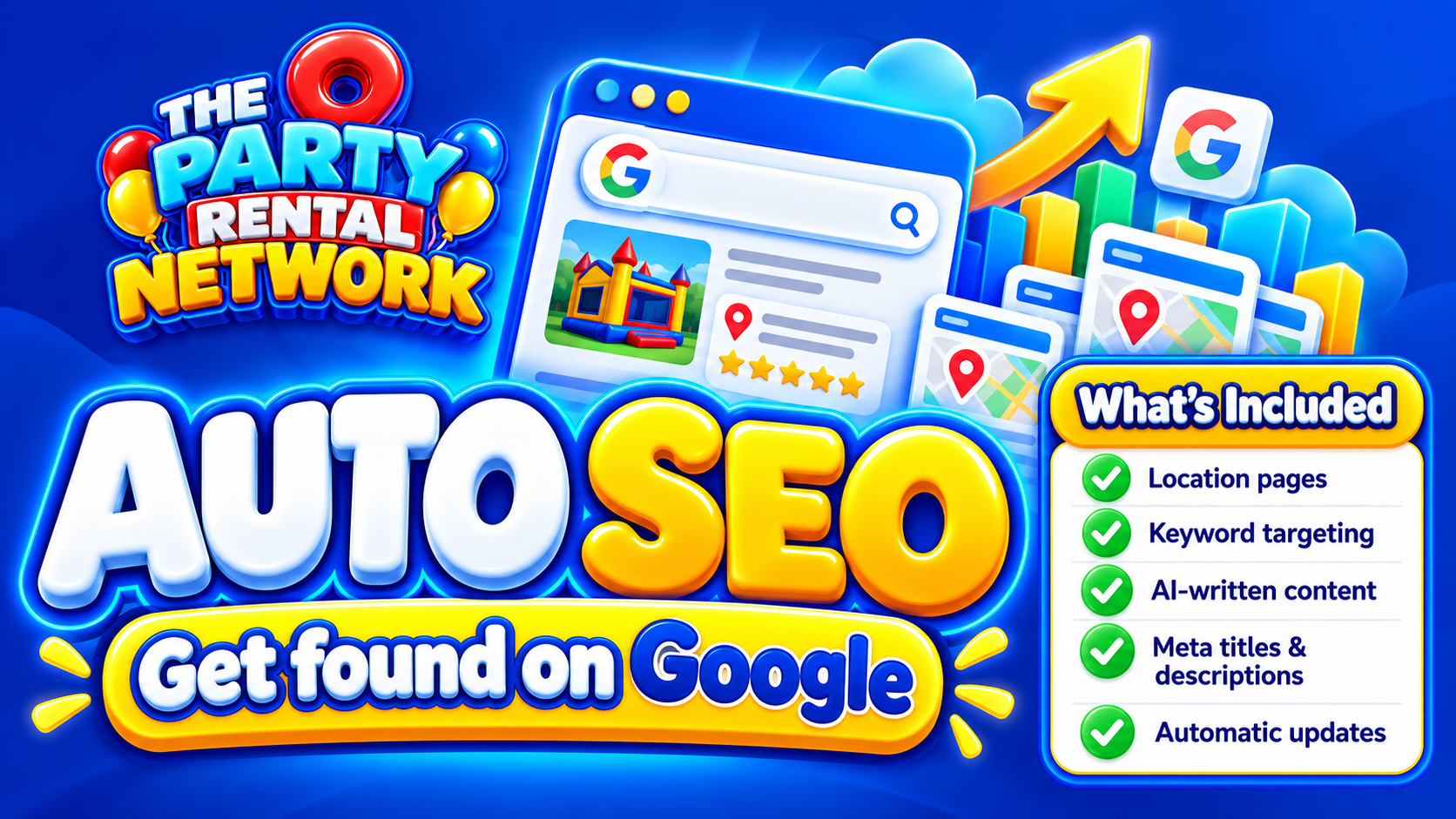
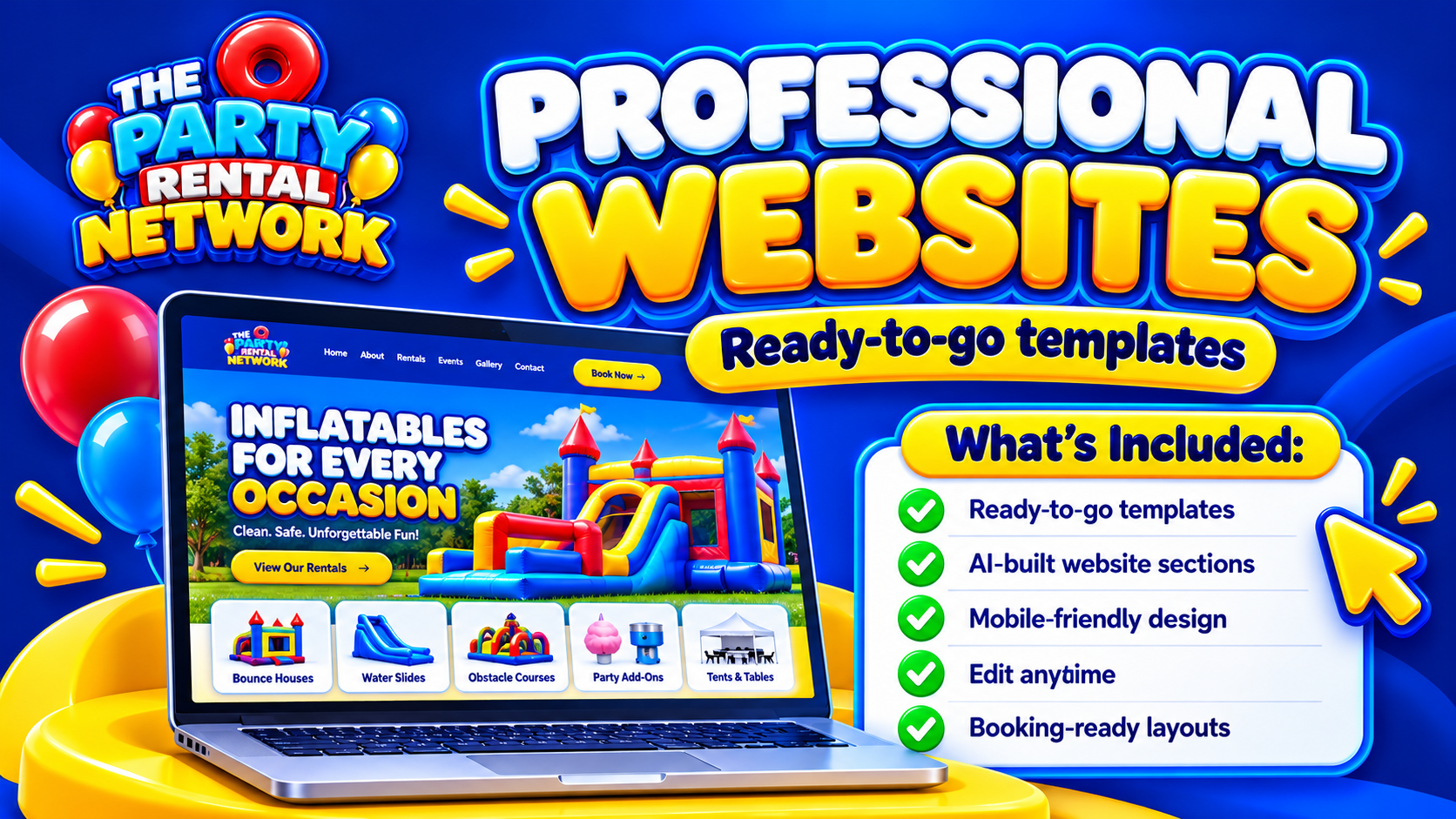
Explore Professional Websites when reviewing your web presence and Auto SEO when considering search support. Neither software nor a well-written page can guarantee Google indexing or rankings; relevance, accessibility and accurate information remain essential.
Give paid campaigns a fulfilment boundary
Before paying for clicks, decide which enquiries are commercially workable. Define the delivery area, products to promote, suitable dates and any minimum-order policy your business actually applies. Advertising a low-value item across a large region can attract interest that transport costs make impractical.
Match each advert to a relevant destination. Someone searching for wedding chair hire should not have to navigate past inflatables and disco equipment to find dimensions, quantities and booking guidance.
Treat campaigns as controlled tests. Track qualified enquiries and resulting bookings, not clicks alone. Pause or adjust promotion when capacity changes rather than continuing to advertise an offer you cannot realistically fulfil.
Plan content around the customer's decision calendar
Your marketing calendar should follow planning behaviour, not simply the event date. A school organising a summer fair may research suppliers well before a household arranging a last-minute birthday party.
Publish practical guidance that removes hesitation: measuring an installation area, checking venue access or deciding who handles setup. Where layout is central to the enquiry, 3D event planner software is a relevant topic to explore, while venue measurements and site checks still matter.
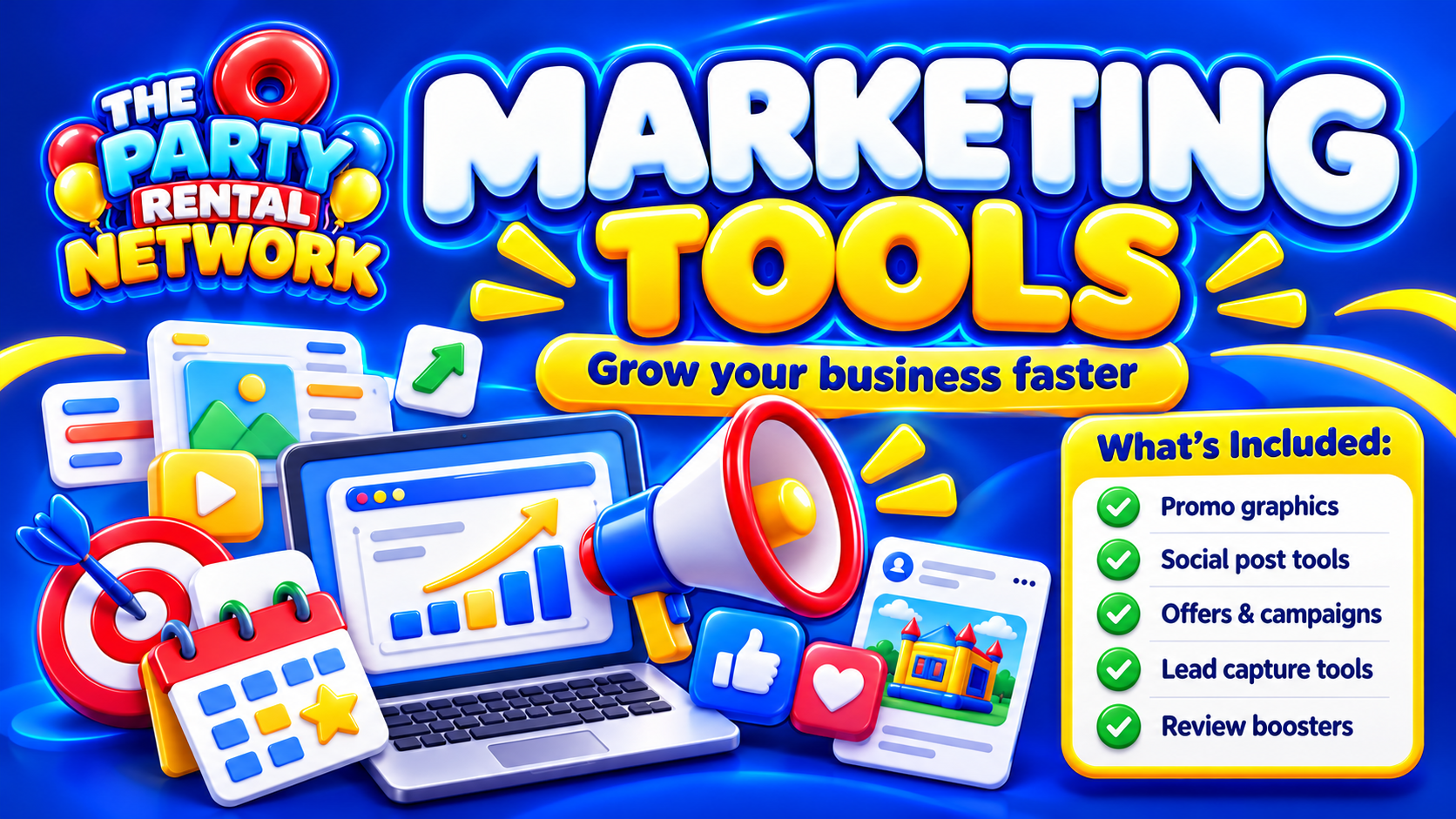
Review Marketing Tools against the work you need to organise. When reusing event photographs or sending promotional messages, obtain appropriate permissions and follow applicable privacy and marketing rules.
Connect marketing measurement to booking reality
A useful reporting process follows the journey from source to enquiry, quotation and confirmed booking. Record why suitable enquiries do not proceed: unavailable stock, delivery limitations, unclear pricing or a slow response suggest different remedies.
Distinguish software selection from system setup. Selection concerns include reporting options, enquiry capture and package scope. Setup means deciding who responds, how sources are recorded and when availability is checked. Buying a tool does not establish those working practices.
When assessing Online Bookings, check the relevant workflow and configuration. Payment availability depends on configuration and launch safeguards; do not advertise an immediate online payment journey until yours is confirmed.
Separate free visibility from paid business tools
A free party rental supplier account can list equipment and make a supplier eligible for opportunities. It does not guarantee bookings or income. Paid subscriptions provide business tools according to package, so compare the included functions with your actual marketing workload.
For network opportunities, the supplier sets the agreed hire price and the network adds its margin. Keep that arrangement distinct from your own advertising budget. You can join the network without treating membership as a substitute for a clear acquisition plan.
Party rental digital marketing questions
Should I prioritise SEO or paid advertising?
Improve essential landing pages first. Paid advertising can test demand, while SEO needs ongoing attention; neither guarantees results.
Do I need a page for every town?
Only where you can provide genuinely useful local information and serve that area. Repeated place-name substitutions offer little customer value.
What should a hire enquiry form ask?
Request the event date, postcode, equipment requirements and relevant access details. Keep the first step proportionate to preparing a useful response.
Is social media enough on its own?
Social posts can generate interest, but customers still need dependable information about coverage, equipment and the enquiry process.
How should I judge affordability?
Compare total spend and staff time with qualified enquiries and confirmed work. Cheap clicks are not necessarily affordable customer acquisition.
What should I check in a demonstration?
Use a realistic enquiry to examine the proposed workflow. Ask which functions your package includes and what requires configuration before launch.