Party rental route planner
What Is The Party Rental Network?
A connected booking, website and AI-powered business platform built around party rentals and event hire, with tools for your equipment, customers, team and wider industry network.
What Type of Party Rental Business Do You Run?
Equipment records, safety documents, delivery planning and artwork tools help keep inflatable hire jobs organised.
The shortest drive can still produce the wrong delivery order. A bouncy castle needed before a school gate closes may take priority over a nearer garden booking. Tables for an upstairs venue may need more unloading time than their mileage suggests. A party rental route planner should therefore start with the promises attached to each booking, not just the postcodes.
Party Rental Network connects transport planning and 3D van loading with the wider hire operation. The practical aim is to build a workable day around equipment, vehicles, people and venue constraints.
See what's possible
Plan backwards from ready-to-use times
A delivery address is only part of a stop. Establish when equipment must be ready, when access becomes available and how long unloading and setup are likely to take. Keep those times distinct: arriving at 10 am is not the same as having an inflatable ready for a 10 am party.
For an illustrative Saturday round, a village hall might allow entry only after a morning class, while a school requires delivery before its gates close. Plan around those fixed windows first, then fit more flexible visits between them. Include realistic travel allowances without treating them as a guarantee against delays.
Make the route and the van agree
A workable driving sequence can become awkward if the first delivery is buried behind the last. Assess route order alongside loading order, equipment dimensions and safe access to the load. Returns matter too: the vehicle needs room for collections, not merely enough space when it leaves the yard.
Explore Route Planning & Loading for the platform’s transport planning and 3D van loading tools. When evaluating them, use a representative mixed load rather than an unusually tidy example. Visual placement supports planning, but does not replace checks on payload, load restraint or safe handling.
Give dispatch dependable booking and stock information
Route planning starts before dispatch. A missing blower, incorrect venue entrance or overlooked collection date can undermine an otherwise sensible round. Agree which booking details staff must check before allocating a job to a vehicle, and who resolves anything incomplete.
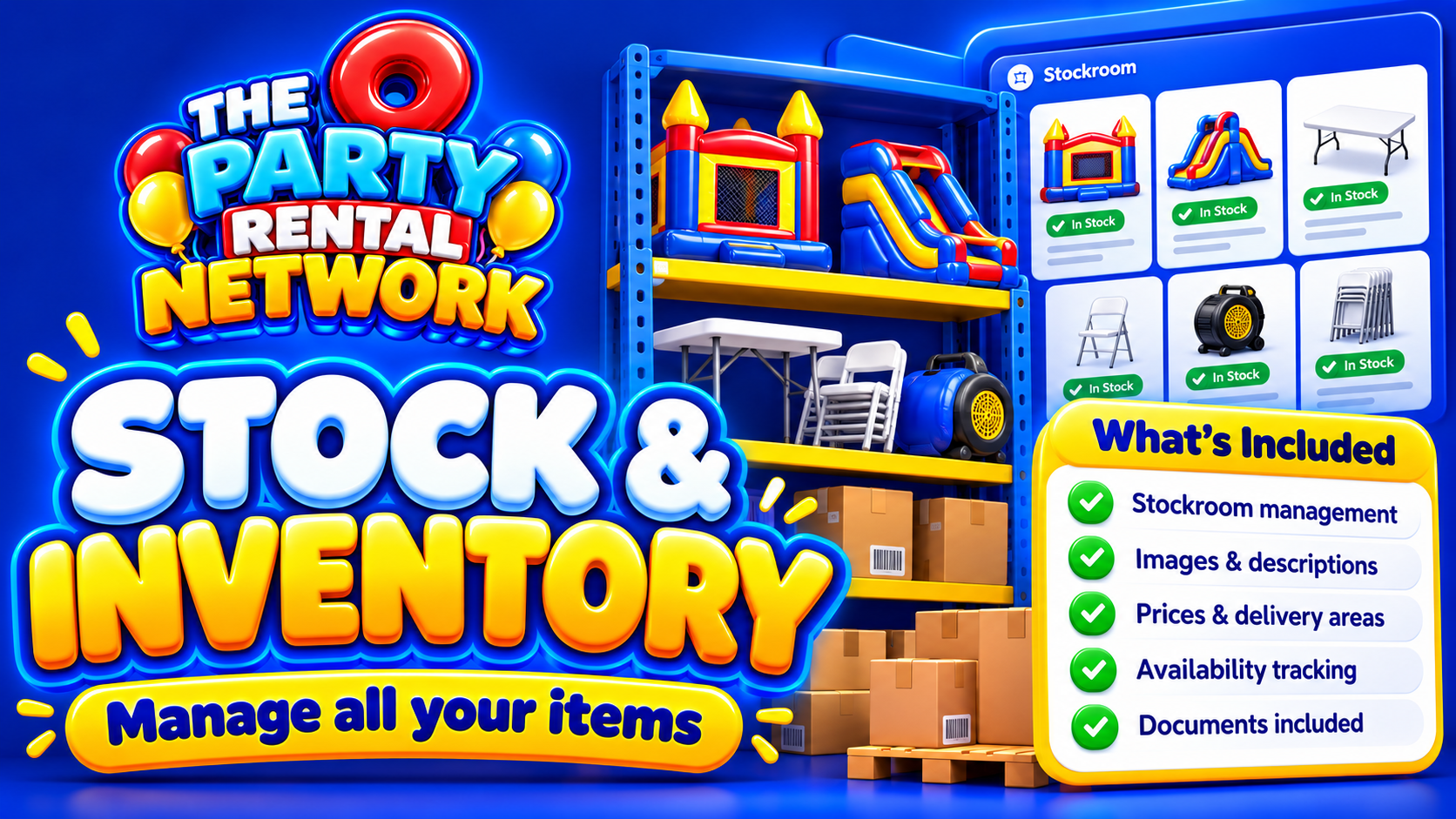
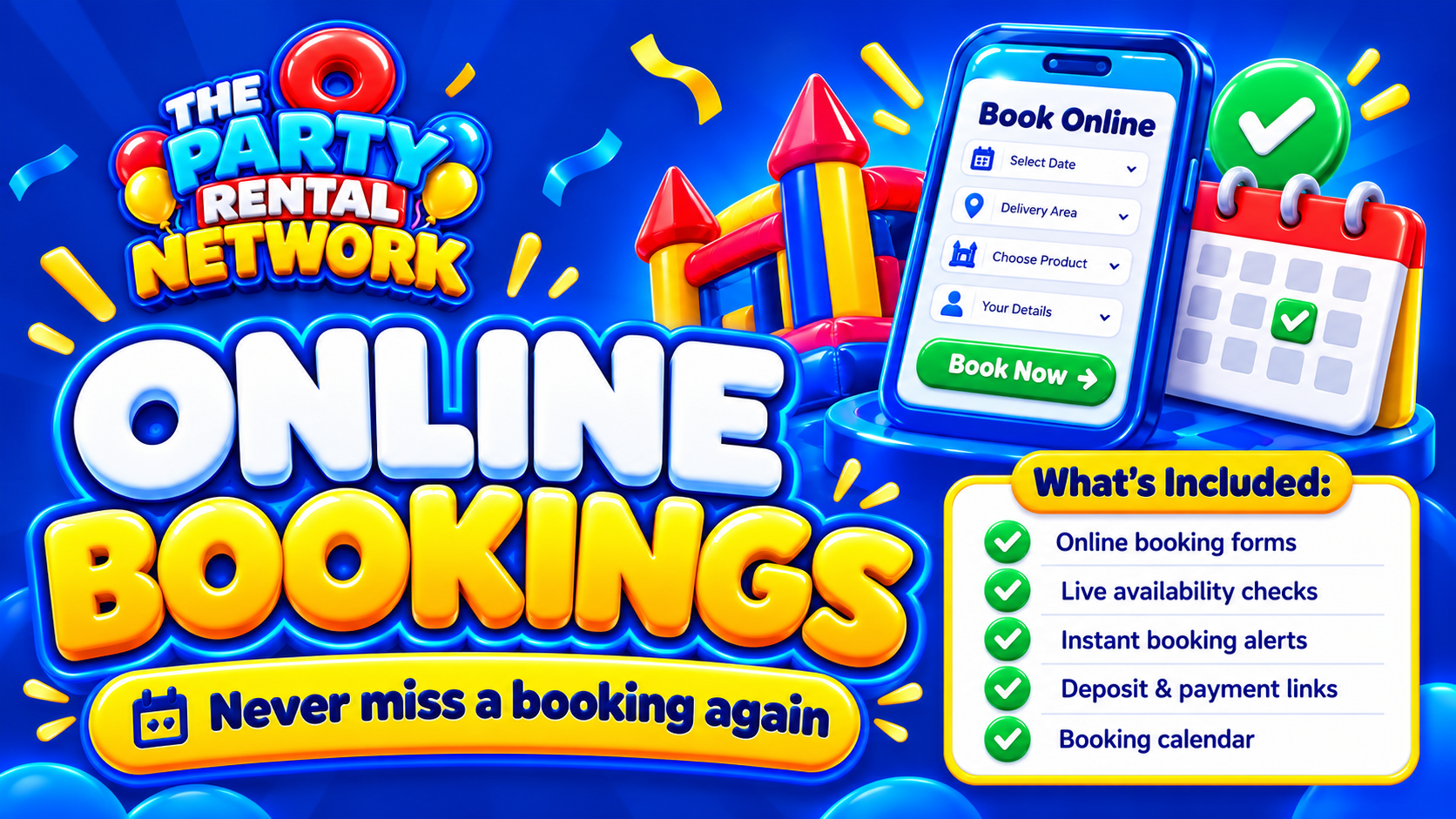
Use Online Bookings as the starting point for understanding booking management, and Stock & Inventory for the equipment stockroom. During setup, check how your package supports the handover from booking information to transport planning. Do not assume that an item’s return time makes it immediately ready for another hire; inspection, drying or repair may affect availability.
Allocate people as carefully as vehicles
Two bookings with similar loads can need different staffing arrangements. A long carry, restricted parking or awkward doorway changes the work at the destination. Plan with the people and handling arrangements the job requires, rather than assuming every driver can complete every stop alone.
Party Rental Network includes staff planning and shared venue passports. Establish how your team will record and review access knowledge, including entrances and venue restrictions. Keep customer contact details useful through Customer Management, while treating historic venue information as something to verify, not a permanent promise of access.
Prepare for changes without confusing planning with tracking
A collection running late can affect the next delivery, available van space and the yard’s closing routine. Decide who can revise the day’s plan, who contacts the customer and how the driver receives the agreed change. Avoid competing instructions from several people.
Route and driver planning are not the same as live vehicle tracking. Do not assume that a planned journey provides a vehicle’s current position or an automatic arrival estimate. During a demo, test a late collection scenario and ask which changes are supported in the package being considered. Wider expansion decisions belong alongside this workflow, as explored in Party rental business growth software.
Separate free access from paid operational tools
Free network accounts can list equipment and become eligible for opportunities. They do not guarantee bookings or income, and free membership should not be confused with access to every business tool. Paid subscriptions provide business tools according to package.
Before choosing a subscription, confirm which transport, loading and staff-planning functions it includes. Compare those functions against your actual rounds and setup effort, rather than judging affordability by subscription cost alone. You can join the network for free access, then assess the operational tools separately.
Questions about party rental route planning
Is a route planner just a map with several stops?
No. For party hire, the useful planning work also considers access windows, setup time, staffing, load order and collections. Mileage alone cannot describe the day.
Can it guarantee the fastest route?
No guaranteed fastest route or journey time should be assumed. Traffic, customer readiness and venue access can change after a plan is prepared.
Does Party Rental Network provide live GPS tracking?
The approved capability is route and driver planning, not confirmed live GPS vehicle tracking. Check any tracking requirement explicitly before selecting a package.
How should same-day collections be planned?
Allow for collection windows, loading time and return space. Check whether returned equipment needs drying, inspection or repair before assigning it to another booking.
Does 3D loading confirm a van is safe to drive?
No. A visual load plan does not certify payload compliance, restraint or vehicle safety. Appropriate checks and competent judgement remain necessary.
What should I bring to a route-planning demo?
Bring representative delivery and collection timings, vehicle dimensions, equipment details and access constraints. Use anonymised examples to test your working day without exposing unnecessary customer information.