Party rental website development
What Is The Party Rental Network?
A connected booking, website and AI-powered business platform built around party rentals and event hire, with tools for your equipment, customers, team and wider industry network.
What Type of Party Rental Business Do You Run?
Equipment records, safety documents, delivery planning and artwork tools help keep inflatable hire jobs organised.
A party hire website has to sell something more complicated than a product: the right equipment, in the right place, for a particular period. A customer might want thirty chairs for Saturday, but your team needs to know when they can arrive, whether access is suitable and when those chairs will return.
Party rental website development should bridge that gap. The aim is not simply a smarter catalogue. It is a customer journey that gathers useful information without making a family organising a birthday feel like they are completing a logistics assessment.
See what's possible
Build around the hire journey, not a retail template
Start by mapping how different customers reach a decision. Someone hiring a garden party package may need dimensions and setup requirements before choosing a date. An event organiser sourcing tables may already know quantities and want to establish availability quickly.
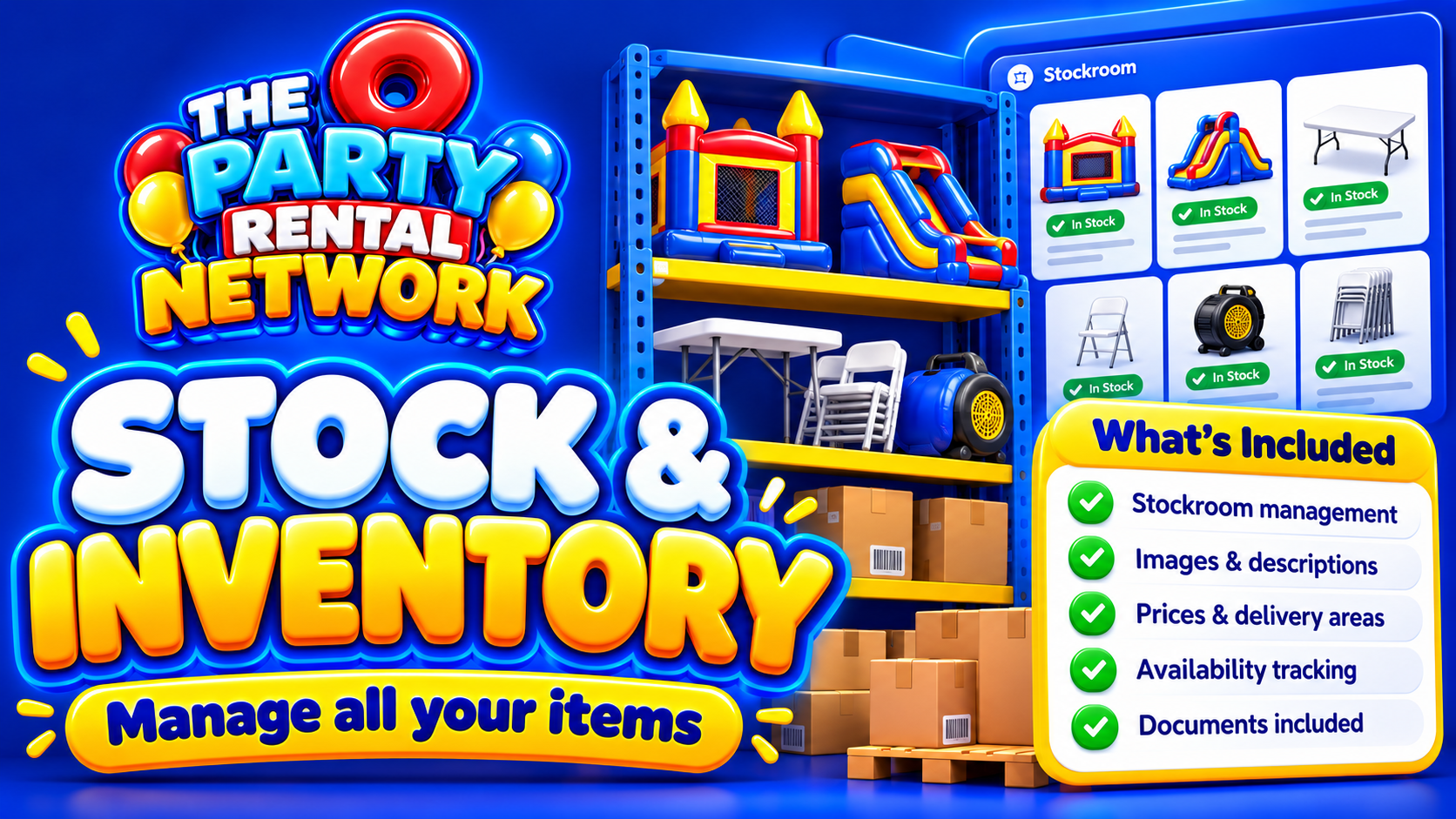
Your page structure should accommodate both. Category pages help visitors compare options; equipment pages explain suitability; the enquiry or booking journey captures dates, location and requirements. Explore Professional Websites when deciding how your public presence should support that process.
Avoid treating collection, delivery and setup as interchangeable. Their differences affect both what customers need to understand and what your team must confirm.
Write equipment pages that prevent avoidable questions
Useful hire descriptions explain what is included, what is excluded and what the customer must provide. For a gazebo, that might mean its footprint, usable space and site requirements. For a lighting package, explain the intended setting and any power requirements relevant to the equipment.
Use photographs to show scale and configuration, not just appearance. Where images show optional accessories, make that distinction clear beside them.
Package pages deserve particular care. An illustrative children's party bundle could contain several individually hired items. Its description should identify the contents clearly, while the development brief should establish how package availability relates to the underlying Stock & Inventory. A polished package page must not obscure a stock conflict.
Define what happens after the customer chooses a date
Before commissioning forms or checkout screens, decide whether each journey produces an enquiry, a provisional request or a confirmed booking. Those outcomes should never look identical to the customer.
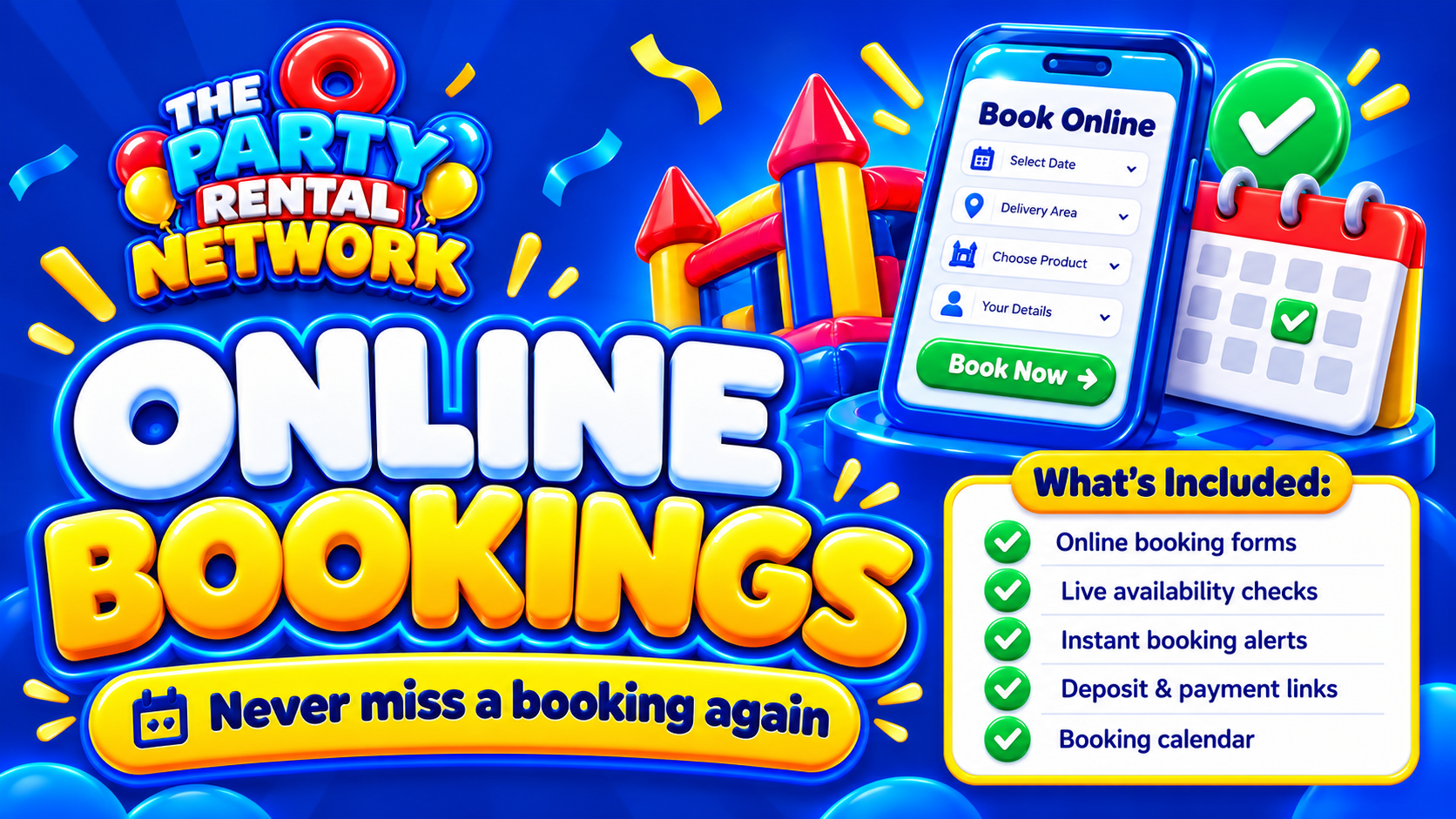
Consider a Saturday marquee request requiring a site discussion. The sensible next step may be an assessment rather than immediate confirmation. A straightforward collection hire might follow a different process. Review Online Bookings against your actual acceptance rules rather than assuming every product needs the same checkout.
Specify which details are essential at each stage. Postcode, hire dates and quantities may come first; access notes and setup arrangements may follow. Payment availability depends on configuration and launch safeguards, so do not design messaging that promises live payment options before they are confirmed.
Connect the website to the working hire system
Selecting website software concerns page editing, mobile layouts, content ownership and how easily staff can maintain descriptions. Setting up the wider system concerns stock rules, booking statuses, permissions and responsibility for updating records. These are related decisions, but they are not the same purchase checklist.
Document where each piece of information is maintained. If equipment details appear in several places, establish which record takes priority and verify any supported connection before relying on it.
The practical questions in Event hire inventory management help frame stock requirements. When considering assistance described in AI powered booking software, keep automation separate from booking authority. Confirmed Work Mode booking voice actions require permissions and confirmation; not every dashboard action is voice enabled.
Make local search useful, then test the journey
Local pages should answer genuine delivery and service questions. Explain the areas you cover, how location affects an enquiry and when customers should discuss access. Replacing town names in otherwise identical text adds little practical value.
Give each important page a clear purpose, descriptive title and relevant internal links. Consider Auto SEO alongside accurate content and a sensible site structure, not as a promise of Google indexing or rankings.
Before launch, test realistic journeys on a phone: a small collection order, a delivery outside your usual area and a package request with incomplete details. Check that labels, validation messages and acknowledgements describe the next step accurately.
Questions about party rental website development
What should a development brief include?
Include your equipment categories, customer types, service areas, booking stages, content responsibilities and required connections. Define acceptance tests so you can judge the finished journey against agreed requirements.
Is a free network account a free website package?
No. Free network accounts can list equipment and become eligible for opportunities. Paid subscriptions offer business tools according to package. Check the scope before you join the network; opportunities do not guarantee bookings.
Should every item be bookable immediately?
Not necessarily. Equipment needing access checks, setup discussions or other assessment may suit an enquiry-led journey. The website should explain what remains subject to confirmation.
Can I keep my existing website?
Assess its content, mobile usability and supported connection options first. Ask what can be retained, migrated or linked; do not assume compatibility without checking the proposed setup.
How should I compare development costs?
Compare scope rather than headline price. Establish what covers content preparation, migration, configuration, testing, ongoing subscriptions and later changes. An affordable proposal still needs to support your everyday hire process.
What should I ask to see in a demo?
Bring a realistic hire scenario and follow it from equipment selection to the staff-facing booking record. Book a demo to discuss the relevant package, configuration requirements and any steps that remain manual.