
Party rental profit tracking software


What Is The Party Rental Network?
A connected booking, website and AI-powered business platform built around party rentals and event hire, with tools for your equipment, customers, team and wider industry network.
What Type of Party Rental Business Do You Run?
Equipment records, safety documents, delivery planning and artwork tools help keep inflatable hire jobs organised.
A fully booked Saturday can hide a disappointing margin. A bouncy castle hire may need a second delivery attempt, a marquee booking may overrun on collection, and wet equipment may require extra handling before it earns again. Booking value alone does not reveal which work pays.
Party rental profit tracking software should help you connect agreed income with the work and equipment needed to earn it. For Party Rental Network users, the practical starting point is consistent booking, stock, transport and accounting records—not treating every pound received as profit.
See what's possible

Start with the booking, not the bank balance
Give each booking a consistent reference across income and cost records. Separate the agreed hire price, discounts, delivery charges, refunds and outstanding balances. A deposit received today may relate to an event next month; it is cash received, not proof that the completed job will be profitable.
Then distinguish three views: expected margin when quoting, revised margin as arrangements change, and actual margin after collection and cost checks. A quotation can look healthy until additional crew time or a subcontracted item is added.
Use Payments & Accounts as a starting point when reviewing financial record requirements. Payment availability depends on configuration and launch safeguards; do not assume every account has live payment processing or automatic bank withdrawals.
Build a costing method that survives a busy weekend
For an illustrative garden-party booking, direct costs might include delivery labour, fuel, setup time, cleaning materials and card processing charges where applicable. Record owner labour too, using a consistent internal hourly allowance. Otherwise, jobs completed personally can appear more profitable than equivalent work assigned to staff.
Keep overheads separate from direct job costs. Storage rent, insurance and subscriptions still need funding, but allocating them differently every week makes comparisons unreliable. One workable approach is to review job contribution first—income less direct costs—then assess whether the combined contribution covers overheads.
Be consistent about VAT. Where VAT applies, mixing VAT-inclusive sales with VAT-exclusive costs distorts comparisons. The accounting and VAT feature information is relevant when assessing record requirements, but software does not replace qualified accounting advice.
Allocate shared transport without inventing precision
Suppose one van serves three nearby hires before collecting a fourth booking. Charging the entire journey to the first customer makes that job look weak and the others artificially strong.
Choose a repeatable allocation method. You might divide basic route costs between stops, then assign additional costs to the booking responsible for a long detour, difficult access or extra crew member. Record the method so comparisons remain meaningful.
Route Planning & Loading provides context for transport planning and 3D van loading. The bouncy castle delivery planner guide is also relevant to delivery-heavy hire businesses. Route and driver planning should not be confused with live GPS vehicle tracking; planned journeys are inputs to costing, not proof of actual mileage or hours.
Judge equipment by earning capacity, not popularity
An item hired frequently is not necessarily your strongest investment. Repeated repairs, drying time, storage space and awkward loading can reduce its contribution. Conversely, a less frequently hired package may earn well when it travels with another booking and needs little additional handling.
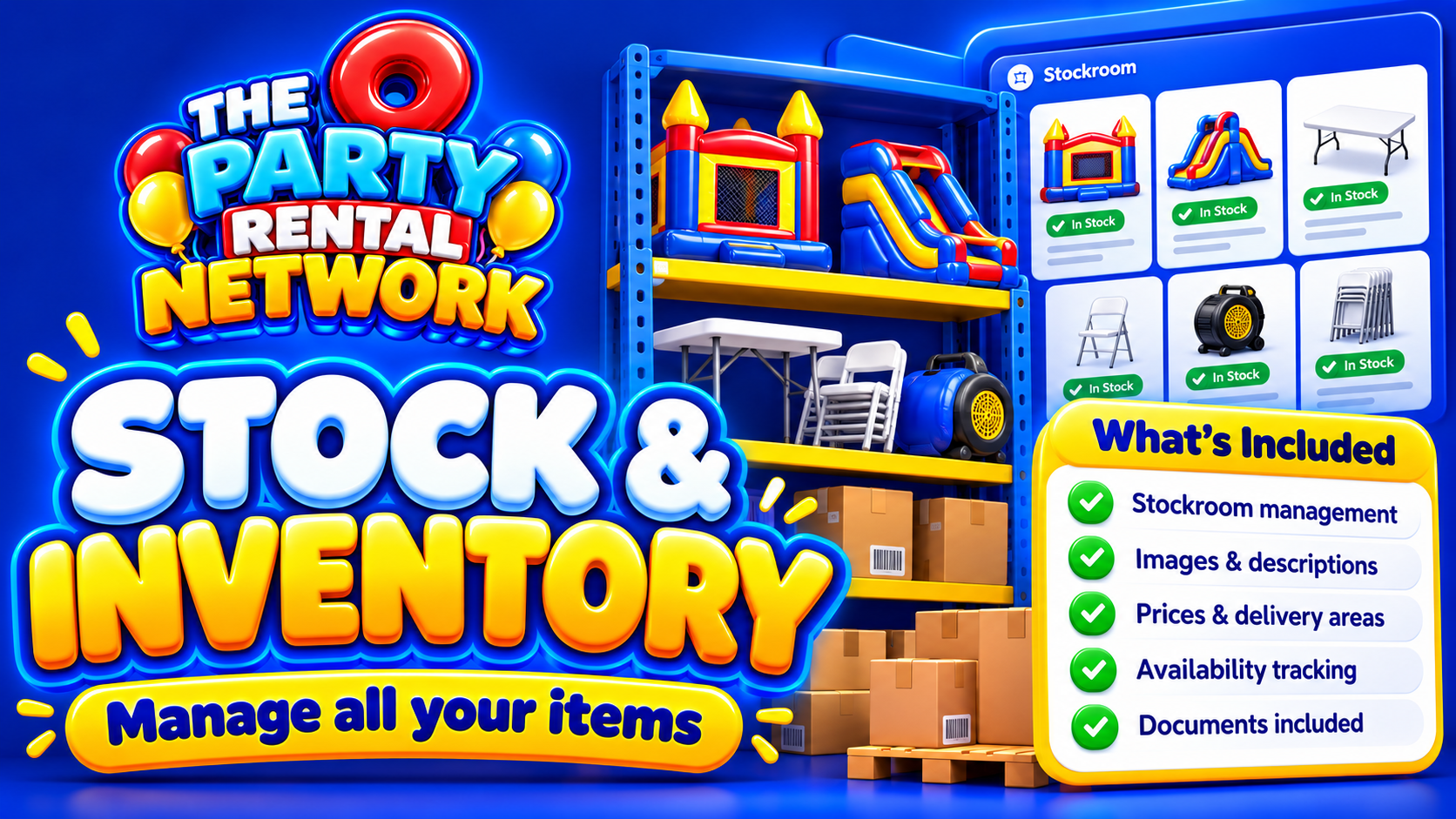
Use Stock & Inventory when considering how equipment records connect with booking decisions. For your own profitability review, compare hire income with attributable upkeep costs and an allowance for eventual replacement.
Avoid interpreting a single expensive repair as the whole story. Review equipment over a suitable period, while recognising that seasonality and unavailable days affect fair comparisons. Financial performance never overrides inspection, maintenance or safety requirements.
Select software around the review you will actually do
The distinction between software and a profit-tracking system is practical. Software holds or processes information; your system defines who records costs, when estimates are replaced and how exceptions are investigated. Neither works well without the other.
Before choosing a package, ask how booking references, adjustments, cost categories and accounting records can be used together. Confirm whether your preferred margin view is available directly or requires a separate calculation. Do not assume a connected platform includes every specialist profitability report.
Free Party Rental Network accounts can list equipment and become eligible for opportunities. Paid subscriptions provide business tools according to package. Assess affordability against the tools you need and the time required to maintain useful records. Neither account type guarantees bookings or income.
Questions about party rental profit tracking software
What is the difference between turnover and profit?
Turnover measures sales; profit accounts for costs. A busy hire diary can generate substantial sales while leaving little after labour, transport, upkeep and overheads. Keep cash flow separate too: unpaid invoices cannot fund today's fuel bill.
Should deposits count towards booking profit?
Track deposits against the relevant booking rather than treating them as a separate sale. Your accounting treatment depends on your circumstances. For operational reviews, compare the completed booking's income with its costs without counting the deposit twice.
How should network opportunities be recorded?
The supplier sets the agreed hire price and the network adds margin. Base your supplier-side assessment on the amount agreed for your hire service and your associated costs, rather than assuming the full customer-facing amount is yours.
Can I start with estimated costs?
Yes, provided estimates are clearly distinguished from confirmed costs. Standard loading, cleaning and delivery allowances can support quoting. Replace them with actual figures where practical, especially when a booking involves unusual access or extra handling.
Does a free account include every profit-tracking tool?
No. Free accounts support equipment listings and eligibility for opportunities; paid business tools depend on the subscription package. Check the specific records and reporting you require before choosing access, rather than assuming full functionality is included.
How often should I review profitability?
Check completed bookings regularly enough to catch missing costs, then review broader equipment and overhead trends monthly or seasonally. The aim is to improve future quotations and operating decisions, not merely explain disappointing results after the season ends.