Moving from Bouncy Castle Booking Software
Operating an inflatable hire business in the United Kingdom requires precision, reliability, and relentless attention to operational safety. For many years, operators relied on early-generation booking systems or basic website plugins to secure weekend hires. However, as customer expectations around mobile ordering, automated notifications, and instant payment processing have evolved, legacy platforms often leave growing businesses bottlenecked by manual administrative tasks, fragmented communication, and inflexible website layouts.
Deciding to transition from legacy bouncy castle booking software to a modern, integrated platform is a pivotal milestone for any serious hire company. Moving systems provides an opportunity to reassess workflows, eliminate double handling of client data, and adopt modern digital tools that streamline weekend delivery chaos. With the right roadmap, the migration process can run smoothly without disrupting existing reservations or harming local organic search visibility.
See what's possible
Business Benefits
Upgrading your software stack delivers immediate commercial and administrative advantages that directly impact your bottom line. Older systems often separate your front-end shop window from your dispatch schedules, requiring manual data entry across disparate calendars or spreadsheets. By consolidating operations into a modern ecosystem, your live availability, dispatch sheets, automated confirmation emails, and accounting processes run seamlessly together, reducing administrative overhead during peak summer trading.
Modern platforms also dramatically improve booking conversion rates on mobile devices. Parents arranging children's birthday parties and corporate event organisers want transparent, instant checkout experiences without having to wait for manual email replies. Providing clear terms, digital contract signing, and straightforward payment methods builds instant trust, turning casual website visitors into confirmed, paid hires before competitors have even checked their inboxes.
Furthermore, transitioning your business allows you to gain better visibility over asset performance, wear and tear, and ongoing maintenance. Instead of treating your equipment list as a simple text catalogue, modern management systems link inventory to usage hours, cleaning logs, and inspection cycles, helping you make informed purchasing decisions when capitalising on high-demand inflatables.
How Party Rental Network Helps
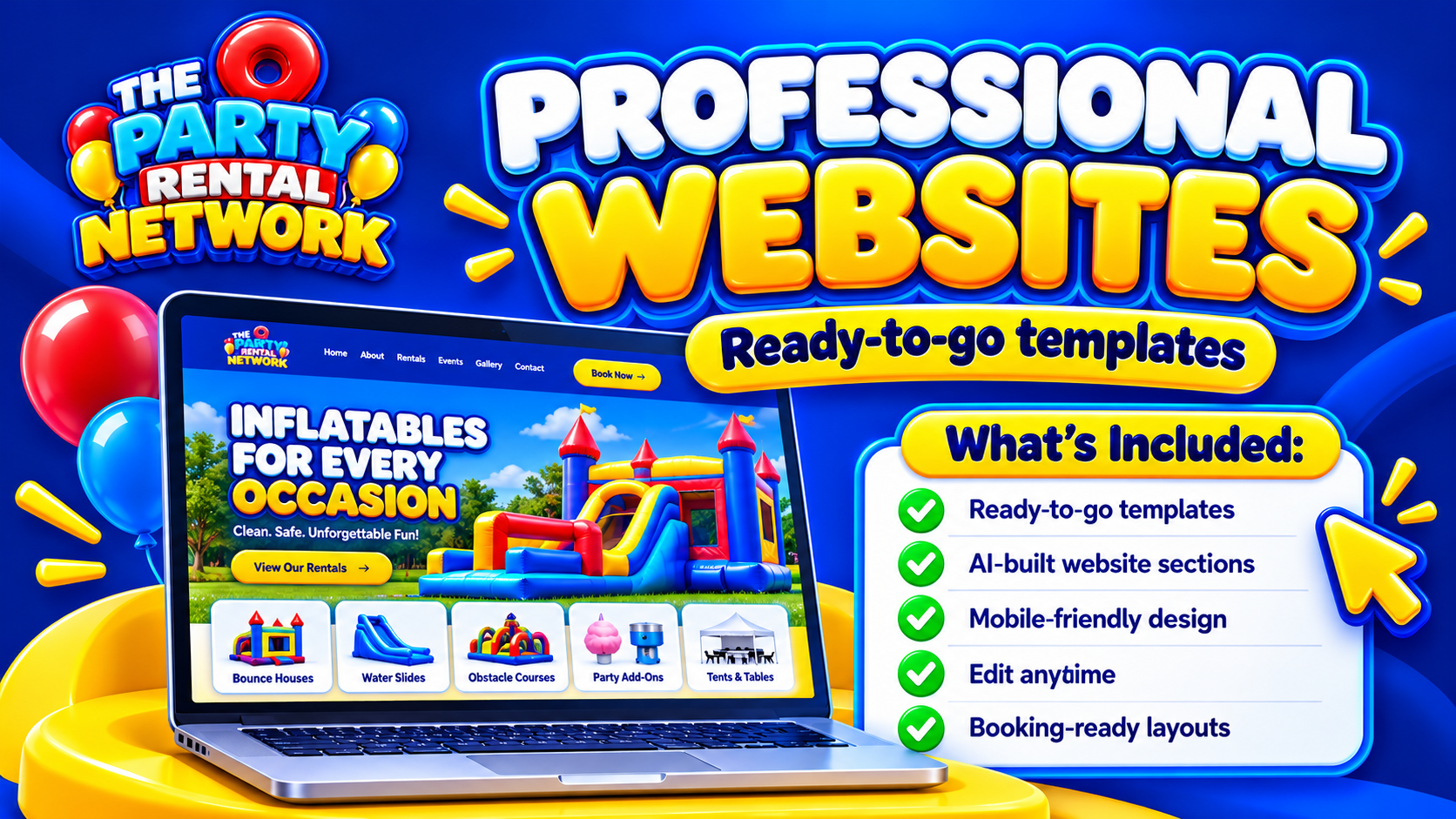
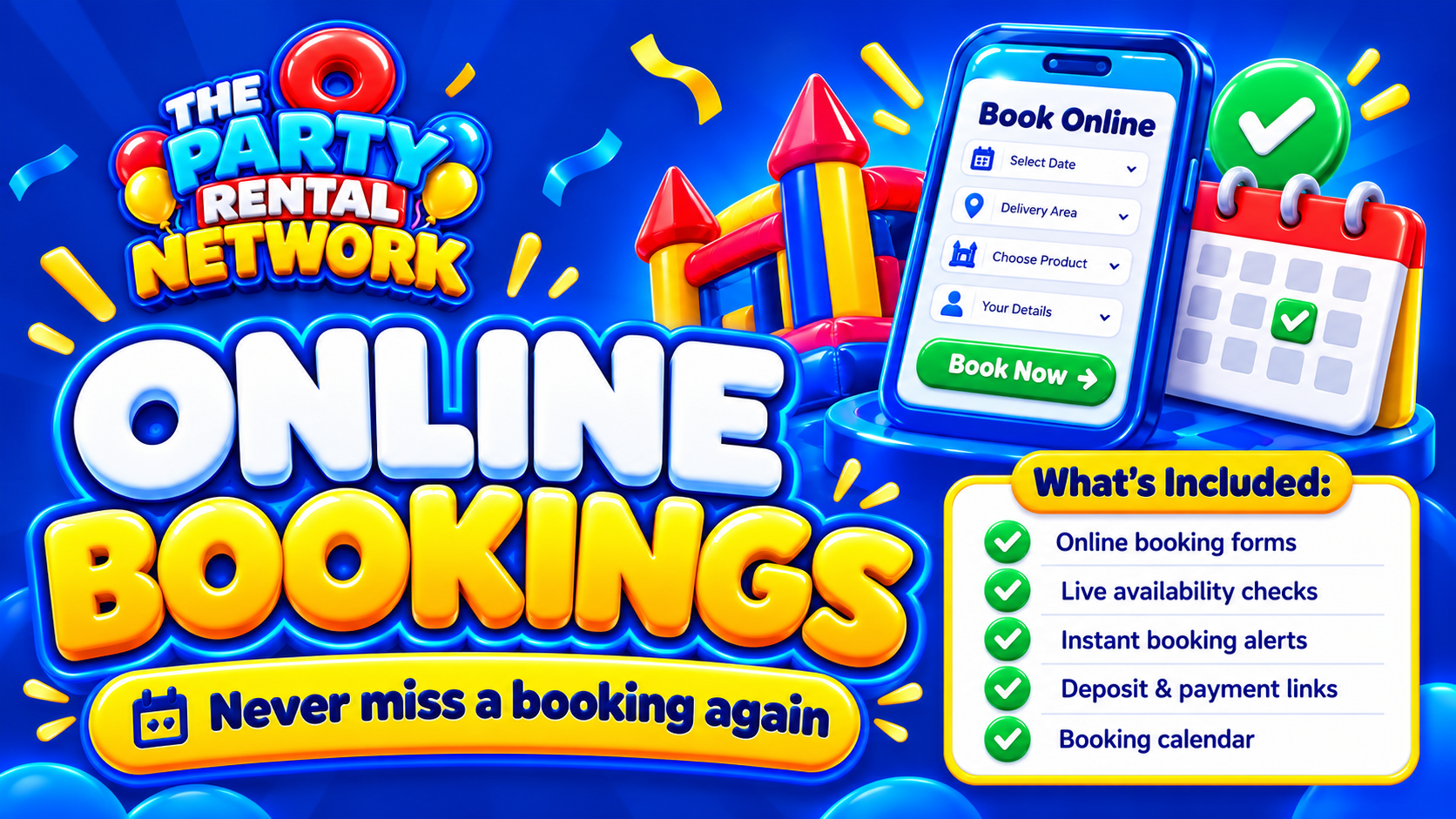
Party Rental Network offers a comprehensive solution engineered specifically for the demands of the UK party hire sector. Rather than patching together external website hosts, diary apps, and invoicing tools, our infrastructure combines high-converting hire websites with automated online bookings, integrated payment gateways, and real-time stock allocation. Every component talks to the central hub, ensuring that when an inflatable is reserved, delivery schedules and stock levels adjust automatically.
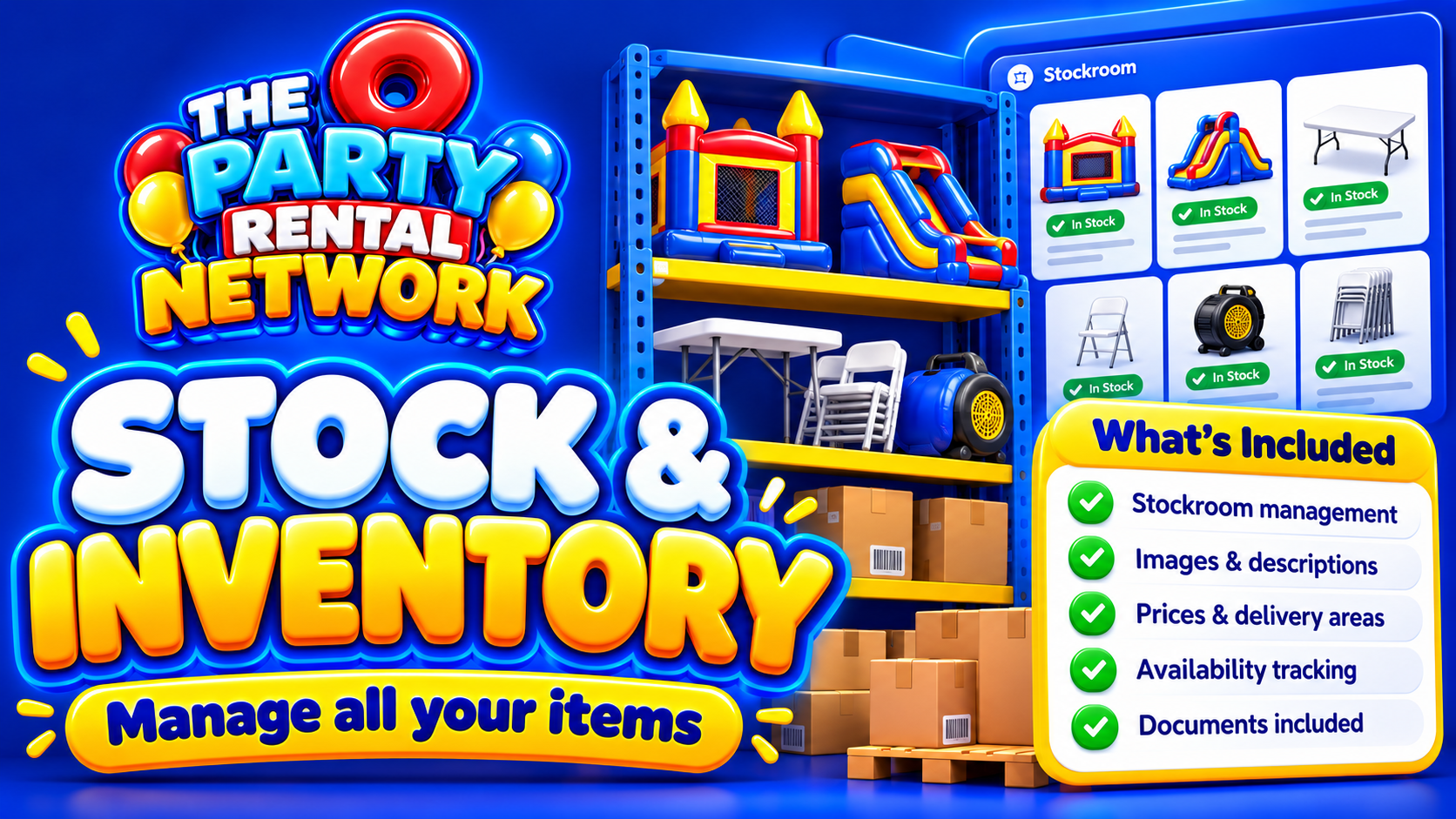
Logistics can make or break weekend hire operations, which is why Party Rental Network incorporates dedicated route planning and loading tools within the central diary. Van drivers receive optimised drop-off and collection runs that consider equipment weight, venue access restrictions, and pack-down windows. Back at headquarters, operators stay fully in control via the Stockroom module, where assets can be tracked through every stage of preparation, dispatch, and post-hire cleaning.
Beyond internal operations, the platform helps you dominate local visibility through automated auto-seo tools while simplifying communications using Yodo, our built-in AI assistant. When unexpected diary gaps arise, or when customer enquiries exceed your available fleet capacity, the integrated supplier network and booking exchange allows you to cross-hire equipment or pass overflow leads to vetted industry peers safely, protecting your client relationships and uncovering new revenue streams.
Planning Your Data Migration and Diary Transition
The foundation of a successful software migration is disciplined data preparation. Before migrating, conduct a thorough audit of your current customer database, purging obsolete records, duplicate profiles, and outdated phone numbers. Consolidating clean customer data into your new customer management system ensures your automated marketing campaigns, seasonal reminders, and balance requests reach genuine, active clients without damaging email deliverability.
Next, plan the transfer of existing advance bookings with extreme caution. The safest method involves establishing a clear cut-off date, after which all new online orders flow into your new platform, while existing commitments are systematically input into the new calendar. For an illustrative example, an operator managing forty advance bookings across the autumn season might spend two dedicated evenings manually verifying each reservation against asset serial numbers and venue delivery times, guaranteeing zero double bookings during the transitional weekend.
Staff training should run concurrently with your data migration. Ensure your drivers and warehouse assistants understand how to access digital delivery sheets, record equipment handovers, and flag on-site issues through mobile devices. When your entire team understands the new system before the first weekend of live trading, operational hiccups are virtually eliminated.
Managing SEO and Domain Redirection Without Traffic Loss
One of the greatest fears operators express when leaving their old website and booking provider is losing hard-earned Google search rankings. Many legacy software companies bundle your bookings with proprietary website builders, meaning a platform migration often coincides with a complete website redesign. Protecting your organic authority requires mapping every existing web address to its exact equivalent on your new platform using server-side 301 redirects.
Prior to switchover, crawl your current website to compile a complete list of indexed URLs, paying close attention to high-value landing pages such as category hubs, town-specific hire pages, and event packages. Recreate these pages within your new website structure, ensuring page titles, heading structures, and comprehensive descriptions match or exceed the quality of your previous site. When you point your primary domain name to your new server, having those permanent redirects active ensures search engine algorithms pass authority seamlessly without displaying broken links to potential hirers.
Once live, immediately submit your refreshed XML sitemap through Google Search Console to encourage swift re-crawling. Monitor your analytical metrics closely over the subsequent fortnight, checking for crawl errors or missing assets. Maintaining continuity in your Google Business Profile links and local citations will further solidify your geographic visibility throughout the migration phase.
Aligning Compliance, Safety Inspections, and Stock Inventories
Migrating your operational hub presents an opportune moment to standardise and digitise your safety documentation. UK operators must navigate strict standards, including the guidance outlined in BS EN 14960, annual safety inspections such as PIPA tests, and the underwriting conditions of their public liability insurance. A modern stock inventory platform allows you to attach digital copies of current inspection certificates, electrical PAT test dates, and bespoke risk assessments directly to each asset profile.
By categorising inventory systematically, you avoid vague product classifications that lead to scheduling mishaps on busy delivery days. Grouping required anchor stakes, sandbags, impact mats, and industrial blowers with each specific inflatable guarantees that delivery crews load the correct auxiliary equipment into each van, eliminating costly return trips to the depot. You should always consult your independent health and safety advisers and insurance underwriters to ensure your digital disclaimers and hire agreements reflect current UK industry guidance.
Finally, update your digital terms and conditions to reflect automated processes, such as adverse weather cancellation protocols, deposit retention rules, and surface suitability requirements. Clear contractual terms agreed at the point of booking protect both your business reputation and financial security, providing an unambiguous record of compliance and customer consent if disputes arise.
Frequently Asked Questions
Will I lose my existing bookings during the switchover?
No, as long as you plan a structured transition and transfer existing commitments into your new diary before directing domain traffic to the new platform. Most operators choose a quiet weekday to switch over their website, allowing ample time to cross-reference advance orders and confirm that every booked item matches live inventory.
How does moving systems protect my current Google search rankings?
Your search equity is preserved by implementing systematic 301 redirects that steer search engines and returning visitors from old web addresses to corresponding pages on your new website. Maintaining relevant page content, clean metadata, and updated sitemaps through modern search optimisation infrastructure ensures search engines index your new site quickly without losing visibility.
Can I import my customer records and purchase history?
Most legacy databases permit exporting your client records into standard spreadsheet formats, which can then be formatted and imported directly into a modern platform. While deep historical logs may require sanitisation, core client information, telephone numbers, postal addresses, and notes are readily transferred into your new database.
How should I time the transition during the hire season?
The optimal period to transition systems is during your quietest operational window, typically between late autumn and early spring for outdoor hire businesses. Making the switch outside peak summer trade gives you and your team sufficient time to configure equipment categories, test automated notifications, and adjust delivery routes without high-pressure order volumes.
What happens to my ongoing Stripe or card payment integrations?
Modern hire platforms integrate directly with established payment processors such as Stripe, meaning you can link your existing merchant credentials seamlessly. Your accumulated processing history and payout schedules remain tied to your merchant profile, avoiding the need to open entirely new banking connections.
How do safety test certificates and PIPA tags transfer across?
You can manually upload or link current PIPA tag numbers, test certificates, and compliance paperwork directly to individual asset records in your new inventory library. Centralising safety documentation against each product ensures automated confirmation emails can deliver valid compliance paperwork directly to schools, local authorities, and corporate clients without administrative friction.
Helping Party Rental Businesses Across the UK
England: London | Birmingham | Manchester | Liverpool | Leeds | Sheffield | Bristol | Nottingham | Leicester | Coventry | Bradford | Newcastle upon Tyne | Southampton | Portsmouth | Plymouth | Derby | Wolverhampton | Stoke-on-Trent | Norwich | Oxford | Cambridge | York | Peterborough | Sunderland | Brighton and Hove | Milton Keynes | Preston | Hull | Gloucester | Exeter | Bath | Chester | Carlisle | Durham | Lancaster | Lincoln | Worcester | Hereford | Canterbury | Winchester | Chelmsford | Colchester | Southend-on-Sea | Salford | Wakefield | Doncaster | Westminster | St Albans | Salisbury | Chichester | Truro | Wells | Ripon | Ely | Lichfield
Wales: Cardiff | Swansea | Newport | Wrexham | Bangor | St Asaph | St Davids
Scotland: Glasgow | Edinburgh | Aberdeen | Dundee | Inverness | Stirling | Perth | Dunfermline
Northern Ireland: Belfast | Derry/Londonderry | Lisburn | Newry | Armagh | Bangor (County Down)